
Miami is the undisputed king of the "experiential" scene. Between the high-octane energy of Art Basel and the massive corporate takeovers at the Miami Beach Convention Center, your brand isn’t just competing with the booth next door: it’s competing with the beach, the nightlife, and the general sensory overload of South Florida.
As a trade show photographer in Miami, I see it all the time. Companies spend six figures on a custom-built booth, fly in their top sales team, and then settle for grainy, poorly composed photos taken on a three-year-old smartphone by a distracted intern. If you want to rank #1 in your industry, you need your visual assets to reflect that level of dominance.
Let’s dive into the seven most common mistakes I see brands making with their trade show booth photography and exactly how we can fix them to ensure your ROI is as bright as a neon sign on Ocean Drive.
1. The "Window Trap": Ignoring Mixed Lighting
Many trade show floors in Miami, like the ones at the Mana Wynwood or the InterContinental, feature large windows or skylights. While natural light is a dream for my fine art photography work at Edin Fine Art, it’s a nightmare for a trade show booth.
When you mix the warm, yellow tungsten lights of a convention center with the cool, blue-ish natural light from a window, your white balance goes haywire. Your vibrant brand colors end up looking muddy or "off."
The Fix:
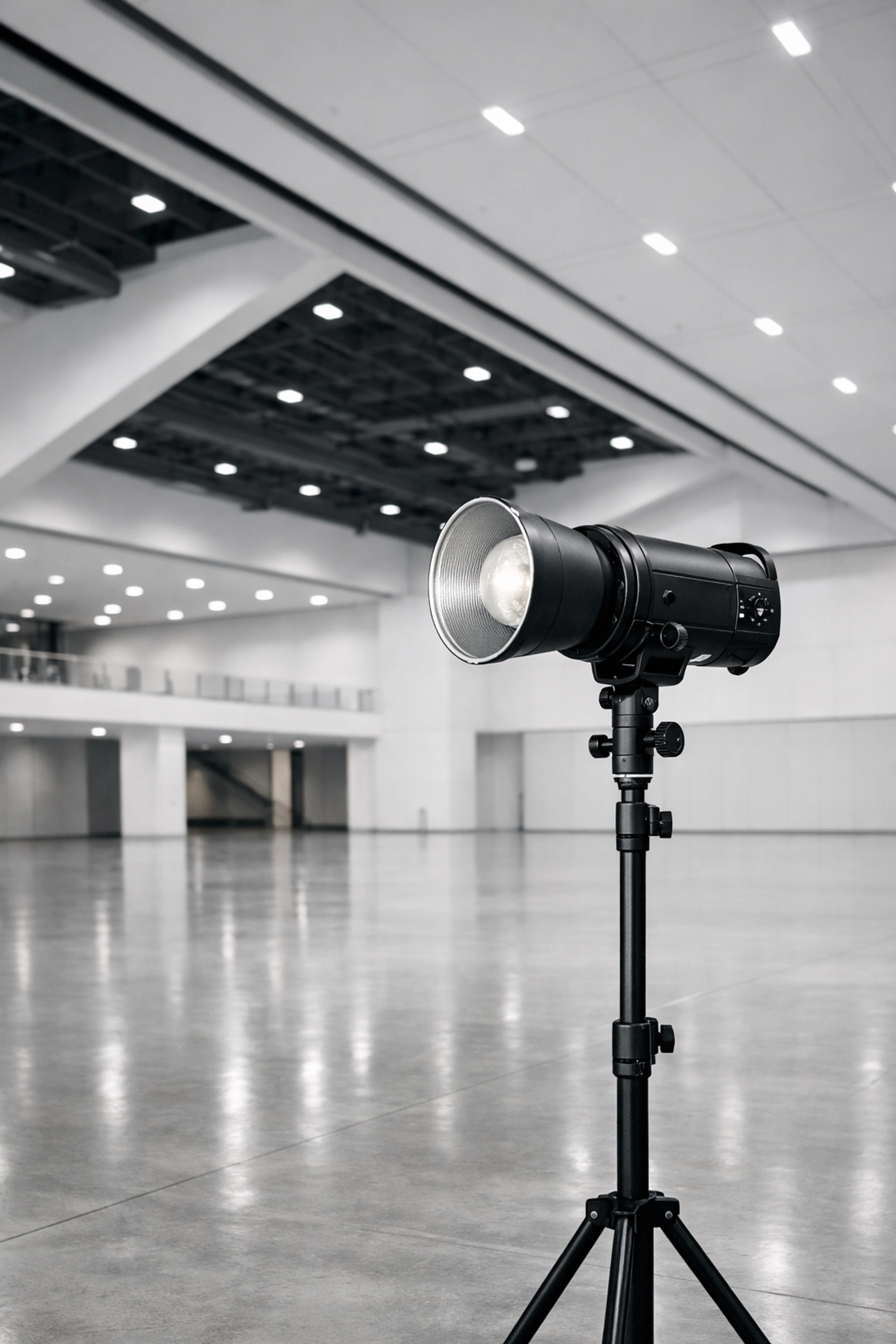
You must treat your booth like a controlled studio environment. I typically use a Profoto B10X strobe bounced off a neutral ceiling or a large modifier to overpower the conflicting light sources. Technically speaking, you want to aim for a shutter speed around 1/125s to 1/200s to kill the ambient flickering of overhead fluorescents, keeping your aperture around f/5.6 or f/8 to ensure the entire booth depth is sharp and in focus.
2. Clutter: The Enemy of Professionalism
I’ve walked into booths that look like a dorm room after finals week. Half-empty water bottles, tangled charging cables, and scattered brochures will kill the "vibe" of your photos instantly. If your photo is cluttered, the viewer’s eye doesn’t know where to land, and your brand message gets lost in the noise.
The Fix:
Designate a "camera-ready" zone. Before I click the shutter, we do a "sweep." Hide the trash, tuck away the bags, and straighten the swag. For the most impactful shots, I recommend using a 24-70mm f/2.8 lens. It allows me to capture the wide context of the booth while also zooming in to get those tight, crisp shots of your product details without changing lenses in a crowded aisle. For more production-heavy needs, you can check out our full-scale capabilities at Edin Studios.
3. The "Ghost Town" Aesthetic (Or the "Wall of Backs")
There are two extremes here: photos of a completely empty booth (boring) or photos where everyone is facing away from the camera (uninviting). You want your trade show photos to scream "engagement." If I see a photo of a booth with no one in it, I assume no one cared.
The Fix:
Timing is everything. I like to capture the booth in three stages:
- The Hero Shot: Clean, empty, and perfect before the floor opens.
- The Action: Candid shots of your team engaging with attendees.
- The Detail: Close-ups of the technology or products.
Pro-Tip: Don't just stand there. I tell my clients to "act natural" but within the frame. When I'm shooting, I look for the "peak moment": the handshake, the laugh, the "aha!" moment when a lead sees your product in action. Check out my Miami photography blog for more tips on capturing authentic human connection.
4. Failing to Test Your Tech Before "Go Time"
Nothing kills the momentum of a high-energy trade show like a photo booth or a lead-gen screen going dark. I’ve seen brands lose hours of engagement because they didn't account for the venue’s shaky Wi-Fi or inadequate power supply.
The Fix:
Always do a full "tech rehearsal" the day before. This includes testing any interactive photo elements, printers, and sharing stations. If you are using a professional trade show photographer in Miami, they should be on-site early to check the venue's specific lighting and power layout. I always carry backup batteries, extra memory cards, and even a portable hotspot because rely on convention center Wi-Fi is like relying on a 2 PM rain shower in Miami: it’s unpredictable and usually messy.
5. Poor Graphic Orientation and Branding
Your booth graphics are designed to be seen from 20 feet away, but your photos need to capture them from 5 feet away. Often, the most important part of your brand: the logo: is blocked by a tall monitor or a staff member’s head in every single photo.
The Fix:
Composition is king. I use the Rule of Thirds to ensure your branding is always in a "power position" within the frame. If your booth has a specific "money shot," tell your photographer. We want to ensure that the logos are sharp, legible, and not distorted by wide-angle lens "barrel distortion." To see how we handle complex visual layouts, you can browse through our sitemap for various industry galleries.
6. Ignoring the "Miami Vibe" (The Context)
If your photos look like they could have been taken in a basement in Nebraska, you’re doing it wrong. People come to Miami for the atmosphere. Your trade show booth photos should reflect the scale and the prestige of the location.
The Fix:
Capture the "Environmental Portrait." This means stepping back and using a wide-angle lens (like a 16-35mm) to show your booth within the context of the entire hall. It shows scale. It shows that you were part of a major event. After a long day of shooting, I usually grab a bike and ride down to South Beach to clear my head: seeing the architecture there always reminds me why "place" matters as much as "product."
7. The "Wait and See" Post-Processing Lag
In the digital age, if you post your trade show photos three weeks after the event, they are ancient history. You need those assets during the show to drive traffic and immediately after to follow up with leads while the iron is hot.
The Fix:
I offer real-time or same-day delivery for "Social Media Highlights." We use high-speed transfers to get edited, professional shots onto your marketing team's phones within hours. For the final gallery, I use professional-grade retouching to ensure skin tones are perfect and colors pop, making your booth look even better than it did in person.
Technical Spec Tip: When editing, I keep the ISO as low as possible (usually ISO 400-800) to avoid "digital noise," ensuring that when you blow these photos up for your next annual report, they are tack-sharp.
Gear List for Your Next Miami Trade Show:
- Body: Sony A7R V (for that massive 61MP resolution).
- Lenses: 24-70mm f/2.8 (The Workhorse) and 16-35mm f/2.8 (The Space Maker).
- Lighting: 2x Profoto B10X with OCF Beauty Dishes.
- Essentials: Extra high-speed V90 SD cards and a sturdy carbon fiber tripod for those long-exposure "motion blur" shots of the crowds.
Final Thoughts
Investing in a corporate event photographer in Miami isn't just about taking pictures; it's about protecting your brand's image. Whether you're showcasing at a tech conference or a luxury brand expo, your photos are your digital storefront. Don't let a "Mistake #1" lighting error or a "Mistake #2" cluttered booth devalue your hard work.
Ready to elevate your next event and take over the search rankings with world-class imagery? Let’s make something epic together.
Connect with us today:
- Explore our full range of services at Edin Chavez Photography.
- See our high-end production capabilities at Edin Studios.
- Invest in stunning visuals for your office at Edin Fine Art.
What's the biggest challenge you've faced with your event photos? Drop a comment below and let's talk shop!