
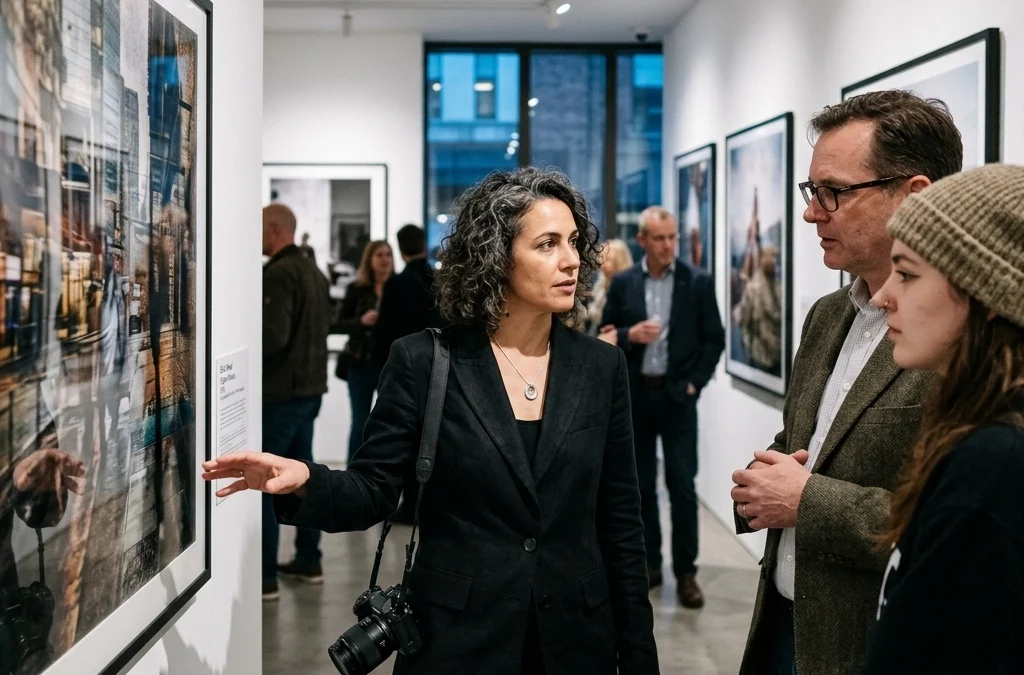
If you’ve spent more than five minutes on the internet lately, you’ve probably seen the "sky is falling" headlines regarding Artificial Intelligence and the creative world. Critics are claiming that photography is dead, and some are even saying that the "soul" of an image can now be generated by a few lines of text while you sip a cold brew in your pajamas. But here is the thing: I think the AI debate is the best thing that has happened to fine art photography in a century.
Why? Because it’s finally forcing us to separate the "button-pushers" from the visionaries. It’s making people realize that a photograph isn’t just a 2D representation of a scene, it’s a record of a human experience. When you look at a piece on www.edinfineart.com, you’re not just seeing a high-resolution file; you’re seeing the hours I spent scouting, the mosquito bites I endured in the Everglades, and the specific choice of a 35mm prime lens to capture the intimacy of a moment.
The Ghost in the Machine: Vision vs. Execution
The primary argument for AI is efficiency. It can create a "perfect" sunset over a "perfect" ocean in seconds. But perfection is boring. In the world of contemporary fine art, we don’t look for perfection; we look for perspective.
AI is essentially a giant math equation. It looks at millions of existing photos and averages them out to create something "pleasing." Fine art photographers, on the other hand, look for the anomalies. We look for the way the light breaks through a storm cloud in a way that feels heavy and emotional, not just "pretty." This debate is shifting the spotlight away from technical execution, which machines can now do, and back onto the artistic intentionality of the creator.
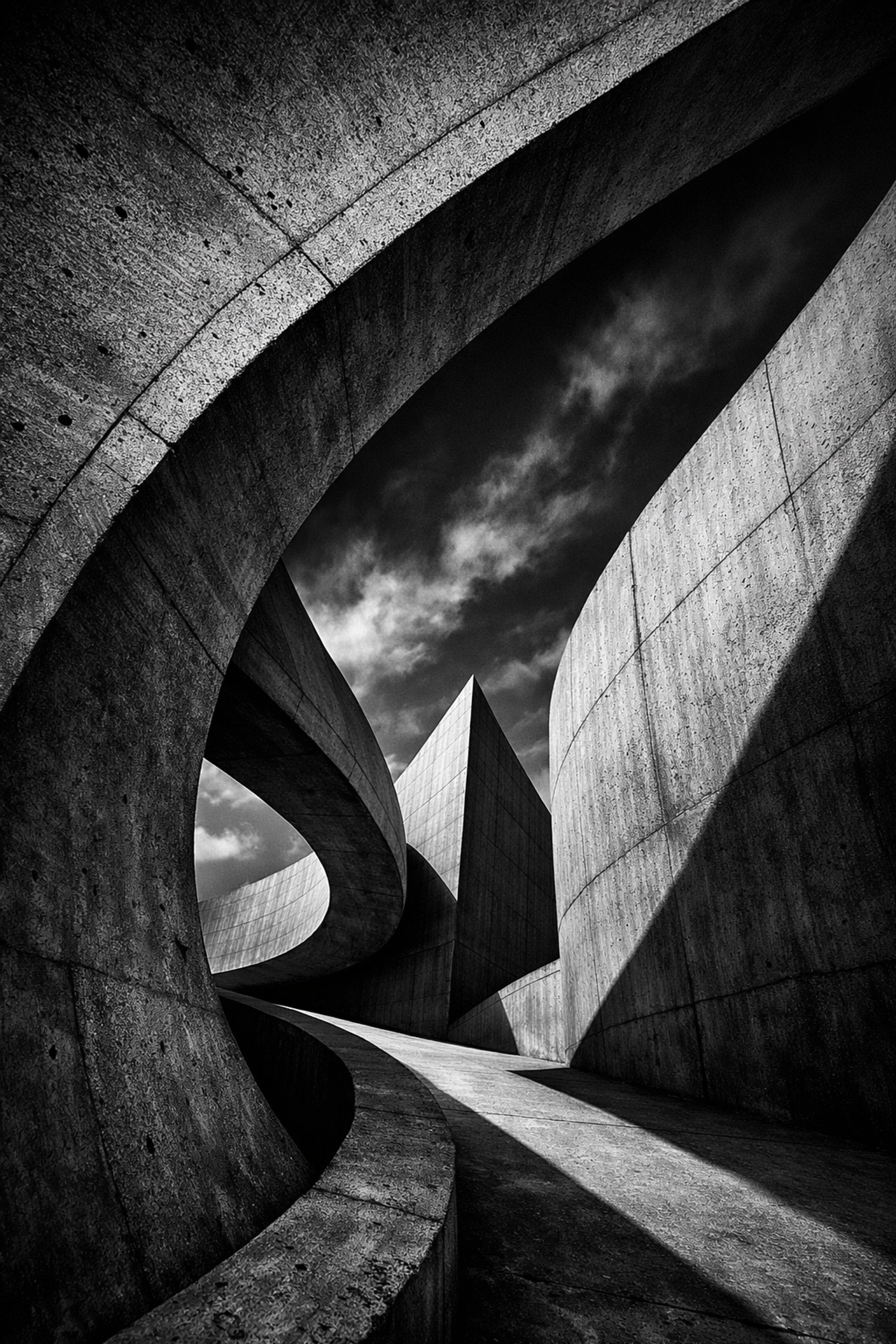
Alt-text: A high-contrast black and white fine art photograph showing the dramatic interplay of light and shadow on architectural lines.
The History Lesson We All Forgot
We’ve been here before. Back in the 1800s, when the first cameras started popping up, painters went into a full-blown panic. They called photography "mechanical" and claimed it required no soul because "the machine does the work." Fast forward a bit, and we realized that while a camera is a tool, a guy like Ansel Adams used that tool to change how we see the natural world.
The AI debate is just "Photography 2.0." Just as the camera didn’t kill painting, it actually pushed painters to become more abstract and expressive (hello, Impressionism!): AI is pushing photographers to dive deeper into their own humanity. It forces us to ask: What can I capture that a prompt can't? Usually, the answer is a mix of timing, physical presence, and the "soul" of the location.
If you are a collector looking for authenticity, you’re likely moving away from generic digital files and toward platforms like ProShoot.io, where you can find real human photographers who are out in the field, sweating for the shot.
Why Presence Matters (The Miami Factor)
Let’s talk about the physical reality of the craft. To get the shot that eventually ends up as a limited edition print, you have to be there. You have to feel the humidity of a Miami morning.
When I’m out exploring the best photography spots in miami (check out my guide to the best miami beach photography spots), I’m making decisions that a computer can’t understand. I’m waiting for that one person to walk into the frame to provide scale, or I’m adjusting my shutter speed to 1/2 a second to get just the right amount of motion blur in the tide.
These are tactical, physical choices. When you buy a physical piece from www.edinfineart.com, you’re buying that Saturday morning I spent on the sand, the salt air in my lungs, and the specific f/11 aperture I chose to ensure every grain of sand was sharp. AI can simulate the look, but it can’t simulate the history of that moment.
The Shift from "Image" to "Artifact"
As digital images become cheaper and more disposable thanks to AI, the value of a physical fine art print is skyrocketing. We are entering an era where "seeing is no longer believing," and that makes the provenance of a photograph more important than ever.
Contemporary fine art photographers are becoming more like curators of reality. We provide the "proof of life." This is why transparency in the process: sharing behind-the-scenes stories on my blog: is becoming so vital. People want to know that the piece hanging in their living room was born from a real-world interaction.
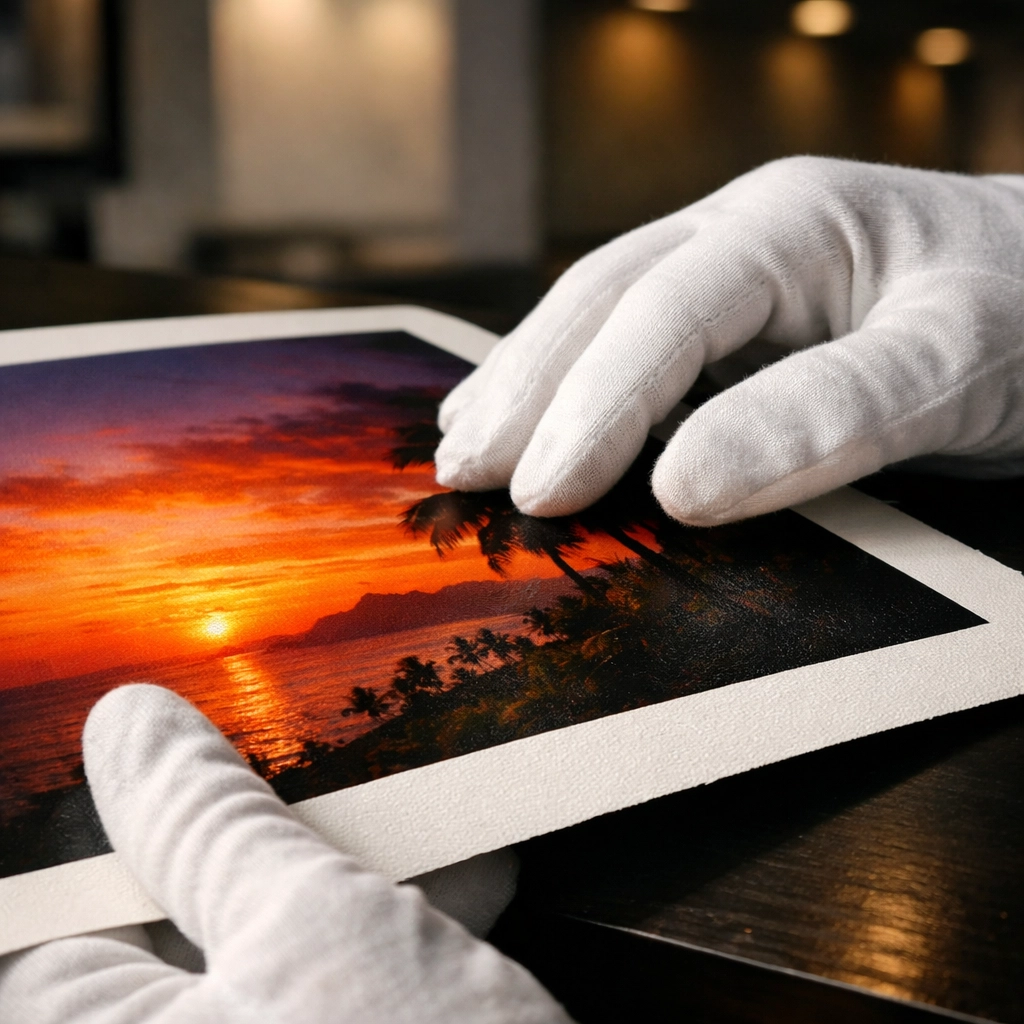
Alt-text: A close-up shot of a large-scale fine art photography print being inspected for quality, highlighting the texture of the paper and the depth of the ink.
The Practical Side: How to Spot "Real" Fine Art in the AI Age
If you’re a collector or even just a photography enthusiast, your "BS detector" needs to be sharper than ever. Here’s how the AI debate is changing the way we evaluate work:
- The Metadata and Story: Real fine art usually comes with a story. Where was it taken? What was the weather like? If the artist can't tell you about the hike to get the shot, it might be a "synthograph."
- The Imperfections: Look for the "beautiful mistakes." A bit of lens flare that isn't perfectly symmetrical, or a slight grain that feels organic rather than a digital filter.
- The Body of Work: Does the photographer have a consistent "eye" across their portfolio? AI struggles to maintain a specific, nuanced human style across different subjects.
Whether you’re looking for a breathtaking landscape or you need to book a corporate event photographer for a high-stakes summit through www.edinstudios.com, the value of a human behind the lens is becoming a premium service. We don't just "take" photos; we make them through a lifetime of accumulated taste.
Technical Mastery Still Rules
Don't let the AI bros fool you: technical skill still matters. Understanding the reciprocity law, knowing how to manipulate ISO to maintain dynamic range in a sunset, and choosing between a circular polarizer or an ND filter are skills that define a professional.
When I’m shooting a high-end corporate project or a sleek commercial for www.edinstudios.com, my clients aren't just paying for an image; they're paying for my ability to problem-solve in real-time. If the lighting at a venue is a nightmare, AI can’t help you in the moment. A seasoned photographer with a bag full of Speedlights and a "can-do" attitude can.
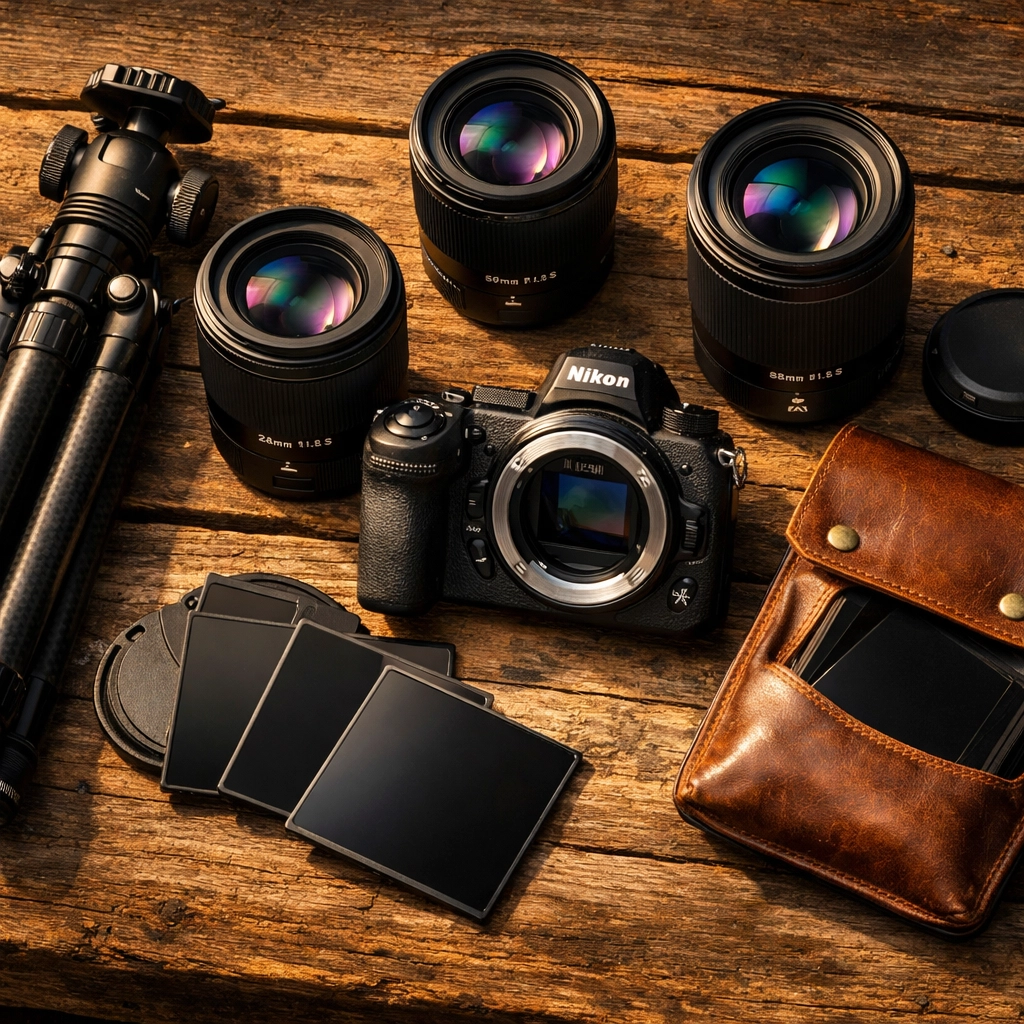
Alt-text: A photographer's camera bag laid out with various lenses, a Nikon body, and professional filters, ready for a landscape shoot.
The Future is Hybrid, But the Soul is Human
I’m not a Luddite. I think AI tools for editing: like removing a stray power line or cleaning up sensor dust: are fantastic. They save us time so we can focus on the creative vision. But the "creation" part? That belongs to us.
The AI debate is stripping away the fluff. It’s forcing the "weekend warriors" who just want a cool Instagram feed to step up or step out, and it’s elevating the fine art photographer to the status of a philosopher with a camera. We are the ones documenting the world as it actually is (or how we emotionally perceive it), and that has a value that no algorithm can ever replicate.
Next time you are browsing www.edinfineart.com, I want you to look past the colors and the composition. Look for the effort. Look for the moment of "humanity" that made me click the shutter at that exact millisecond.
Conclusion: Go Out and Shoot (Real) Stuff
If you’re a photographer feeling discouraged by AI, don’t be. Use this as a kick in the pants to find your unique voice. Go to the best photography spots in miami, bring your tripod, and wait for the light. Join a community like ProShoot.io to connect with others who value the craft.
The machines might be able to draw, but they can't live. And in fine art photography, living is the most important part of the job.
What’s your take on the AI debate? Does it make you value "real" photos more, or do you think the line is getting too blurry? Drop a comment or head over to the shop to see what a "human-made" masterpiece actually looks like. Let's keep the art real.